

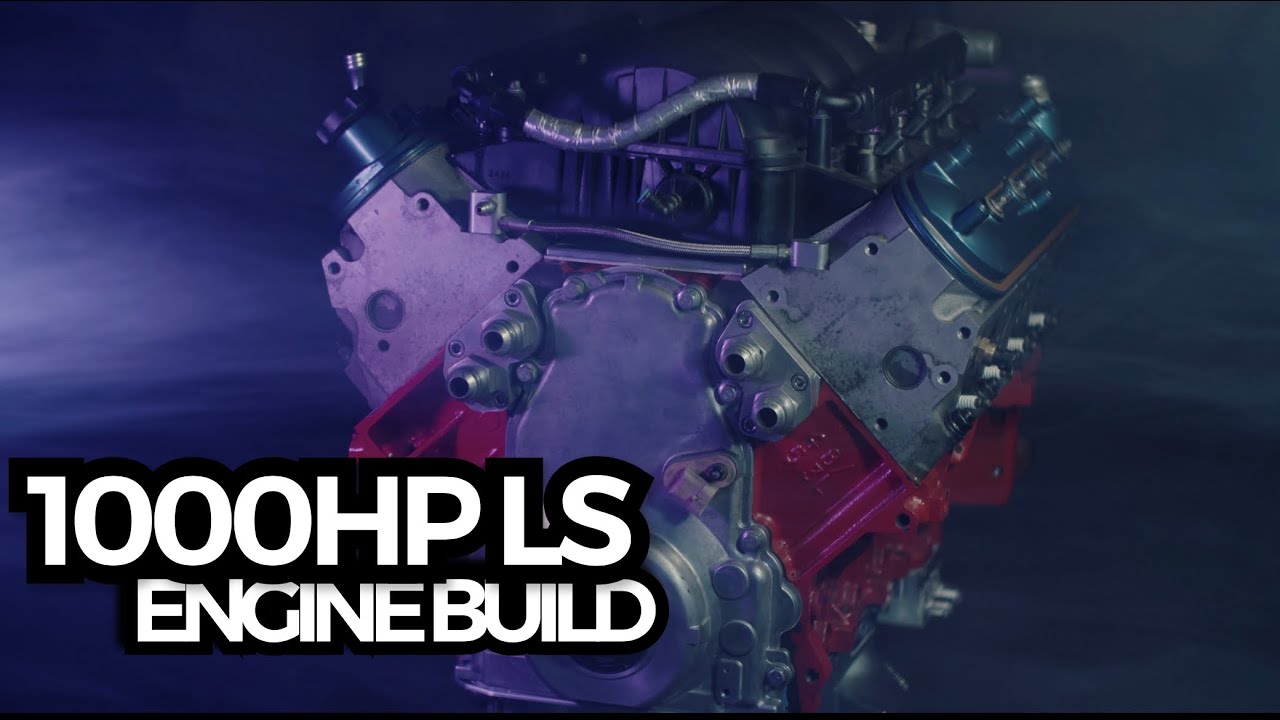
How to Make 1,000 HP on a Budget LS Engine (Turbo vs Supercharger Comparison)
![Dyno chart showing horsepower curve comparison between turbocharged and supercharged LS engines, with peak power exceeding 1,000 HP]
Caption: Reaching four-digit horsepower with an LS engine is achievable on a budget—if you make smart choices about your power adder and components.
The LS engine family has revolutionized the performance world not just because of its factory power, but because of its incredible ability to handle massive horsepower on a budget. What other engine platform lets you start with a $500 junkyard pull and end up with 1,000 horsepower? The answer lies in forced induction—and the choice between turbocharging and supercharging will define your build’s cost, character, and complexity.
In this guide, we’ll break down exactly what it takes to build a budget LS 1000 HP combination, compare the costs and trade-offs of turbos versus superchargers, and show you proven combinations that actually work on the street.
The Math of Boost: How Forced Induction Multiplies Power
Before diving into specific components, it’s essential to understand how boost creates power. The relationship is beautifully simple: boost is a multiplier of your engine’s naturally aspirated output.
The Basic Formula:
-
14.7 psi of boost = 1 atmosphere = double your NA horsepower
-
Each 1 psi of boost adds approximately 6.8% more power
Real-World Example:
If you have a 400 HP naturally aspirated LS engine and add 10 psi of boost:
-
10 ÷ 14.7 = 0.68 (68% increase)
-
400 × 0.68 = 272 HP gain
-
Total: 672 horsepower
Push that to 14.7 psi, and you’re at 800 horsepower. This math explains why 1,000 HP is so achievable with boost—you don’t need exotic components, just enough engine to start with a solid foundation.
The Secret Sauce: Every horsepower you gain in naturally aspirated power before adding boost multiplies under pressure. A 50 HP gain in NA output becomes a 100 HP gain at 14.7 psi. That’s why the best budget builds optimize their heads, cam, and intake even before adding boost.
Choosing Your Foundation: The Best Budget LS for 1,000 HP
![Junkyard 6.0L LQ4 iron block LS engine with accessories still attached]
Caption: Iron block 6.0L truck engines like the LQ4 and LQ9 are the foundation of choice for budget 1,000 HP builds thanks to their strength and low cost.
Not all LS engines are created equal when it comes to handling 1,000 horsepower. Here’s how the popular options stack up:
| Engine | Displacement | Block Material | Stock Power | Boost Potential | Typical Cost | Best For |
|---|---|---|---|---|---|---|
| 5.3L LM7/L59 | 5.3L | Iron | 285-320 HP | 1,000+ HP (built) | $500-$1,200 | Extreme budget builds |
| 6.0L LQ4 | 6.0L | Iron | 300-340 HP | 1,200+ HP (built) | $800-$1,500 | Best all-around value |
| 6.0L LQ9 | 6.0L | Iron | 345 HP | 1,200+ HP (built) | $1,000-$1,800 | Higher compression, more NA power |
| LY6 | 6.0L | Iron | 360 HP | 1,300+ HP (built) | $1,500-$2,500 | Rectangular port heads |
The Verdict: For a budget LS 1000 HP build, the 6.0L LQ4 or LQ9 offers the best combination of displacement, strength, and affordability. The iron block provides a robust foundation, and the extra cubic inches help spool turbos faster and make more power at lower boost levels.
Pro Tip: The LQ9’s flat-top pistons provide 10.0:1 compression versus the LQ4’s 9.4:1 dished pistons. If you’re planning a turbo build, the lower compression LQ4 is actually preferable. For superchargers, either works well.
The Great Debate: Turbo vs Supercharger for Budget 1,000 HP
![Comparison shot showing turbo system components alongside supercharger kit on workbench]
Caption: The choice between turbo and supercharger determines your power characteristics, installation complexity, and ultimate cost.
Turbocharging: The Efficiency King
Turbochargers use exhaust gas energy to spin a compressor—essentially “free” power since it recovers energy that would otherwise be wasted. This makes turbos inherently more efficient than belt-driven superchargers.
Turbo Pros for Budget Builds:
-
Highest power potential: Turbos can support significantly more horsepower than comparably priced superchargers
-
Better efficiency: Less parasitic loss means more power to the wheels
-
Tunable boost: Easy to adjust with boost controllers
-
Broader power band: Peak torque comes on earlier and carries to redline
-
Junkyard turbo options: Surplus diesel turbos can be had for pennies on the dollar
Turbo Cons:
-
Installation complexity: Requires custom exhaust work, oil lines, and intercooler piping
-
Heat management: Turbos generate significant underhood heat
-
Lag: Larger turbos may have noticeable spool time
-
Space constraints: Finding room for turbo(s), piping, and intercooler can be challenging
Budget Turbo Example: The legendary “1K for 8K” build used a $1,000 VS Racing 80mm turbo on a built 5.3L to achieve 1,000 HP for approximately $8,000 total.
Supercharging: Instant Gratification
Superchargers are belt-driven directly from the crankshaft, providing instant boost with zero lag. This makes them feel like a bigger engine rather than a power-adder.
Supercharger Pros:
-
Instant throttle response: No lag, feels like a larger naturally aspirated engine
-
Simpler installation: Most kits bolt on in a weekend with minimal fabrication
-
Cleaner appearance: Everything sits on top of the engine
-
Predictable power: Easy to tune and calibrate
-
Better for street driving: Instant torque makes daily driving more enjoyable
Supercharger Cons:
-
Higher cost per horsepower: Supercharger kits typically cost more than turbo setups for equivalent power
-
Parasitic loss: Takes power to make power—spinning the blower consumes 50-100 HP
-
Heat generation: Roots and twin-screw blowers heat the intake charge more than turbos
-
Limited upgrade path: Boost changes require pulley swaps
Budget Supercharger Reality: A Whipple 2.3L kit costs $5,400-$6,900, while their 3.8L Gen 6 system runs $7,000-$9,700. That’s just the supercharger—you still need an engine, fuel system, and cooling.
Cost Comparison: Building a 1,000 HP LS
| Component | Turbo Build (Budget) | Turbo Build (Premium) | Supercharger Build |
|---|---|---|---|
| Donor Engine | $800 (6.0L LQ4) | $2,500 (Built short block) | $1,500 (6.0L LQ9) |
| Machine Work | $500 (ring gap, bearings) | Included | $800 (prep work) |
| Rotating Assembly | $1,200 (rods/pistons) | $2,500 (forged crank/rods/pistons) | $1,500 (forged pistons/rods) |
| Heads/Cam | $1,500 (used heads + cam kit) | $2,800 (CNC heads + custom cam) | $2,500 (ported heads + blower cam) |
| Power Adder | $2,500 (turbo kit + intercooler) | $4,500 (precision twin turbo) | $6,500 (Whipple kit) |
| Fuel System | $800 (injectors + pump) | $1,500 (return-style + dual pumps) | $1,200 (injectors + boost ref) |
| Cooling | $500 (intercooler + fans) | $800 (upgraded cooling) | $600 (heat exchanger) |
| Exhaust | $500 (turbo manifolds + downpipe) | $1,200 (custom headers) | $300 (supercharger exhaust) |
| Tuning | $500 (dyno time) | $800 (professional calibration) | $500 (dyno time) |
| Miscellaneous | $500 (gaskets, fluids, fittings) | $1,000 (all new components) | $600 (pulleys, belts, etc.) |
| TOTAL ESTIMATE | $9,300 | $18,100 | $16,000 |
Key Insight: The cheapest path to 1,000 HP is a single turbo on a built 5.3L or 6.0L. The “1K for 8K” concept is possible if you already have a vehicle and do all your own fabrication. Most builders should budget $9,000-$12,000 for a reliable turbo 1,000 HP combination.
Proven 1,000 HP Budget Build Recipes
Recipe 1: The 5.3L Turbo “Junkyard Hero”
![Dyno pull screenshot showing 1,005 HP from turbocharged 5.3L LS engine]
*Caption: This 5.3L combination made 1,005 HP with a ProCharger F1A-94—proving small displacement can still deliver four-digit power.*
Based on the Going Pro 5.3L build:
Engine Foundation:
-
5.3L iron block (LM7), bored to 5.7L (3.903″ bore)
-
Stock cast crankshaft (proven to 1,000+ HP)
-
Wiseco forged dished pistons (-11cc)
-
SCAT forged I-beam rods
Top End:
-
AFR Mongoose CNC-ported cylinder heads (300+ cfm)
-
Brian Tooley Racing blower cam (.613/.596 lift, 227/244 duration, 115 LSA)
-
Holley Hi-Ram intake with 105mm throttle body
-
Holley HP management system with 83 lb/hr injectors
Power Adder:
-
ProCharger F1A-94 centrifugal supercharger
-
4.25″ blower pulley, 7.75″ crank pulley (21.5 psi boost)
-
Air-to-water intercooler system
-
114 octane race fuel
Results: 1,005 HP @ 7,100 RPM | 758 lb-ft @ 6,900 RPM
Cost Estimate: $14,000-$16,000 with all new components
Recipe 2: The 6.0L Single Turbo Budget Special
Based on OnAllCylinders testing:
Engine Foundation:
-
6.0L LQ4 iron block (stock bottom end, ring gap opened)
-
Stock crank, rods, and pistons (yes, really!)
Top End:
-
Brian Tooley Racing Stage 3 turbo cam (230/235 duration)
-
TEA Stage 2 317 truck heads (ported)
-
FAST LSXRT intake, 102mm throttle body
-
89 lb/hr injectors, E85 fuel
Power Adder:
-
Precision Turbo 7675 CEA ball-bearing turbo
-
DNA stainless turbo headers with custom Y-pipe
-
Turbosmart 45mm wastegates
-
ProCharger air-to-water intercooler
Results: 929 HP @ 6,500 RPM | 796 lb-ft @ 5,900 RPM (at only 10.6 psi boost)
Cost Estimate: $8,000-$10,000 (using E85 and smart parts choices)
Recipe 3: The “1K for 8K” Challenge Build
Based on Chevy Hardcore’s famous build:
Engine Foundation:
-
5.3L Gen III block, torque-plate honed to 3.800″
-
Stock 3.622″ cast crankshaft (balanced)
-
BoostLine Performance short block with forged H-beam rods and forged 4032 pistons
-
ARP main studs and head bolts
Top End:
-
862 casting cylinder heads (smaller chambers for compression)
-
Melling stainless factory replacement valves
-
Summit Racing dual valve spring kit
-
Summit Pro LS Stage II turbo cam (226/230 duration, .600″/.575″ lift)
-
Summit LS7 hydraulic roller lifters
-
Stock intake manifold and throttle body
-
Holley 100 lb/hr injectors
Power Adder:
-
VS Racing 80mm VSR-series turbo (Gen 2 billet wheel, 1.32 A/R T6)
-
VS Racing 60mm wastegate
-
VS Racing 50mm blow-off valve
-
Flowtech LS turbo headers (1.75″ primaries)
-
Snow Performance water-methanol injection (instead of intercooler)
Results: 1,000+ HP (on race gas/methanol)
Cost Estimate: $8,000-$9,000 (with creative fabrication and parts choices)
Critical Upgrades for 1,000 HP Reliability
Making 1,000 HP is one thing; keeping it together is another. Here’s what absolutely must be addressed:
![Cutaway of LS engine showing forged rods and pistons compared to stock components]
Caption: Stock LS rods (left) are the weak link at 1,000 HP. Forged rods and pistons (right) are mandatory for reliability.
1. Ring Gap
This is the most overlooked yet critical detail. Stock ring gaps will close up under heat and boost, causing ring butting and immediate engine failure. Must gap rings to 0.028″-0.035″ depending on boost level.
2. Connecting Rods
Gen III powdered metal rods are the weak link. They’ll survive 600-700 HP but not 1,000. Budget for forged rods (I-beam or H-beam).
3. Pistons
Stock hypereutectic pistons will crack under sustained 1,000 HP operation. Forged pistons are mandatory for reliability.
4. Head Studs
Stock head bolts stretch under boost. Upgrade to ARP head studs for consistent clamping force.
5. Fuel System
You need enough fuel—period. 1,000 HP requires approximately 100 lb/hr injectors and a pump capable of 300+ LPH at 58 PSI. E85 requires even more capacity (roughly 30% more).
6. Tuning
A conservative, professional tune is cheaper than a new engine. Pay for quality calibration.
Turbo vs Supercharger: The Final Verdict
| Factor | Turbocharger | Supercharger |
|---|---|---|
| Cost to 1,000 HP | $8,000-$12,000 | $14,000-$18,000 |
| Installation Difficulty | Complex (fabrication required) | Moderate (bolt-on kits) |
| Power Characteristics | Progressive, carries to redline | Instant torque, immediate response |
| Peak Power Potential | Highest (1,500+ HP capable) | Good (800-1,200 HP typical) |
| Heat Management | Challenging (exhaust side) | Moderate (intake charge heating) |
| Efficiency | Excellent (uses exhaust energy) | Fair (parasitic loss) |
| Best Application | Track cars, maximum power builds | Street cars, immediate response wanted |
![Finished turbo LS engine installation in engine bay showing clean piping and intercooler]
Caption: A well-executed turbo LS build requires thoughtful packaging but delivers incredible power per dollar.
Our Recommendation
For the purest budget LS 1000 HP build, turbocharging is the clear winner. The cost per horsepower is significantly lower, the power potential is higher, and the efficiency is better. A single 76-80mm turbo on a built 5.3L or 6.0L can hit 1,000 HP with room to spare.
However, if your priority is street driving enjoyment and you have the budget, a supercharger’s instant response is genuinely addictive. There’s nothing quite like mashing the throttle and having all 1,000 HP available immediately—no waiting for boost, no spool time.
The compromise solution: A twin-turbo setup with smaller turbos (like 62mm twins) offers the best of both worlds—quick spool from the small turbos with the efficiency of turbocharging. It’s more expensive but delivers incredible response.
Frequently Asked Questions
Q: Can a stock 5.3L bottom end handle 1,000 HP?
A: Not for long. While YouTube videos show stock bottom ends surviving dyno pulls at 1,000+ HP, real-world street reliability requires forged rods and pistons. The stock crank is actually quite strong and can survive with proper tuning.
Q: What’s the cheapest way to make 1,000 HP?
A: A 6.0L LQ4 with a single 80mm turbo, aftermarket rods and pistons, ported 317 heads, and a good cam on E85. Budget $8,000-$10,000 and expect to do your own fabrication.
Q: How much boost does it take to make 1,000 HP?
A: Typically 15-22 psi depending on your engine combination. Higher compression engines need less boost; better heads flow more air, requiring less pressure.
Q: Is E85 required for 1,000 HP?
A: Highly recommended. E85’s cooling effect and knock resistance make it the ideal fuel for high-boost applications. Pump gas builds at 1,000 HP require conservative tuning and often race gas or methanol injection.
Q: What transmission do I need for 1,000 HP?
A: You’ll need a built 4L80E, TH400 with transbrake, or a heavy-duty manual like the T56 Magnum. Stock transmissions will not survive 1,000 HP.
Q: How long will a 1,000 HP LS last?
A: With proper parts selection, conservative tuning, and good maintenance, a 1,000 HP LS can last tens of thousands of street miles. Drag race only cars with aggressive tunes may need freshening more frequently.
Conclusion: Your 1,000 HP LS Journey
Building a budget LS 1000 HP engine is one of the most rewarding projects in hot-rodding. The LS platform’s incredible strength, combined with modern turbo technology, makes four-digit horsepower accessible to enthusiasts who would have considered it science fiction just 20 years ago.
Your path to 1,000 HP:
-
Start with an iron 6.0L (LQ4 or LQ9)
-
Budget for forged rods and pistons (non-negotiable)
-
Choose your weapon: Single turbo for budget/efficiency, supercharger for instant response
-
Don’t skimp on fuel system and tuning
-
Support your power with a built transmission and upgraded drivetrain
Remember, 1,000 HP in a 3,500 lb car is genuinely violent. Before you chase the number, make sure your chassis, brakes, and safety equipment are ready for the power.
Ready to start your build? Browse our selection of [LS Engine Components] or [Contact Our Forced Induction Specialists] for personalized advice on your 1,000 HP budget LS build.
[Back to LS Engine Swap Guide] | [Shop Turbo Kits] | [Shop Supercharger Kits]