

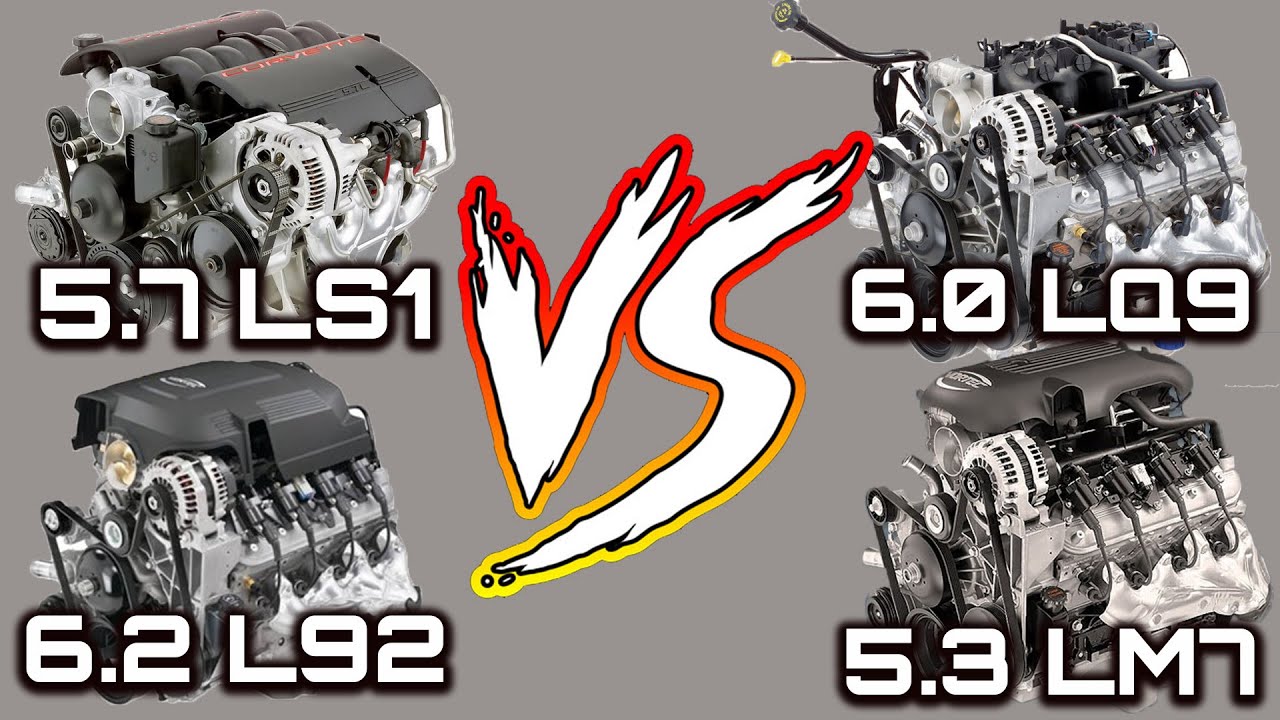
5.3L vs 6.0L vs LS3: Which LS Engine Should You Buy?
![Three LS engines displayed side by side: a 5.3L iron truck engine, a 6.0L iron LQ4, and an LS3 aluminum crate engine]
Caption: From budget-friendly truck pulls to high-performance crate motors, the LS family offers an engine for every project and budget.
The LS engine family offers an overwhelming number of choices. With options ranging from $500 salvage-yard pulls to $10,000 factory crate engines, how do you decide where to invest your money? The answer depends on your goals, budget, and the demands of your specific project.
In this LS engine comparison, we’ll break down the three most popular LS platforms—the ubiquitous 5.3L truck engine, the robust 6.0L iron block, and the legendary LS3—to help you make an informed decision.
The Contenders: Overview
| Engine | Displacement | Typical Power | Block Material | Average Cost | Best For |
|---|---|---|---|---|---|
| 5.3L (LM7/L59) | 5.3L (325 ci) | 285-320 HP | Cast Iron | $500-$1,200 | Budget builds, first-time swappers |
| 6.0L (LQ4/LQ9) | 6.0L (364 ci) | 300-360 HP | Cast Iron | $800-$1,800 | Torque-heavy applications, trucks |
| LS3 (6.2L) | 6.2L (376 ci) | 430-480 HP | Aluminum | $8,000-$10,000 | Premium performance, resto-mods |
5.3L Truck Engine: The Budget Champion
![1999-2007 GM 5.3L LM7 truck engine showing typical salvage-yard condition with accessories attached]
Caption: The 5.3L LM7 is the most abundant LS engine in existence, with millions produced for GM trucks and SUVs between 1999 and 2007.
The 5.3L iron truck engine (commonly coded LM7, LM4, or L59) is the entry point for most LS swappers—and for good reason. With millions produced for Chevrolet and GMC trucks, SUVs, and vans, these engines are plentiful, inexpensive, and surprisingly capable.
Power Potential: 285-320 HP (stock) to 400+ HP (with cam/heads)
Weight: Approximately 425 lbs (with accessories)
Pros:
-
Extremely Affordable: Complete pull-out engines can be found for $500-$1,200
-
Parts Availability: Every auto parts store stocks parts for these engines
-
Forged Crankshaft: All 5.3L engines feature a forged steel crank
-
Simple Electronics: Gen III electronics are well-understood and easy to modify
-
Good Aftermarket Support: Thousands of cam, head, and intake options
Cons:
-
Iron Block Heavy: Adds significant weight compared to aluminum options
-
Lower Power Ceiling: Stock heads limit power to about 450 HP without serious work
-
Truck Accessories: Accessory drive components designed for truck chassis
Ideal For: Budget builds, first-time swappers, rat rods, and projects where cost is the primary concern.
Pro Tip: The 5.3L responds incredibly well to a simple cam swap. For under $1,500 in parts, you can build a 350-375 HP engine that will embarrass much more expensive builds.
6.0L Iron Block: The Torque Monster
![GM 6.0L LQ4 engine showing the distinctive iron block and truck accessories]
Caption: The 6.0L LQ4 and LQ9 engines offer substantial displacement and torque in a durable iron package perfect for heavier vehicles.
If the 5.3L is the budget king, the 6.0L iron block (LQ4/LQ9) is the torque king. These engines found their way into GM’s 2500-series trucks, vans, and SUVs, where they were tasked with moving serious weight. That torque-heavy personality makes them perfect for heavy vehicles and those seeking strong low-end grunt.
Power Potential: 300-360 HP (stock) to 500+ HP (with cam/heads)
Weight: Approximately 475 lbs (with accessories)
Pros:
-
Significant Displacement: 6.0L provides genuine big-block torque in a small-block package
-
Strong Bottom End: Forged crank and powder-rod construction handle 500+ HP easily
-
LQ9 Advantage: The LQ9 (found in Cadillac Escalade) features higher compression and better heads
-
Truck Torque: Exceptional low-end grunt perfect for heavy vehicles
-
Vortec Truck Accessories: Easy to source and modify
Cons:
-
Heavy: The iron block adds about 100 lbs compared to aluminum LS engines
-
Truck Accessories: Like the 5.3L, accessory drive packaging can be tight in some swaps
-
Gen III Limitations: Earlier 6.0L engines lack some Gen IV refinements
Ideal For: Heavy vehicles, trucks, SUVs, and anyone wanting maximum torque per dollar.
Pro Tip: The LQ9 variant with its 10.0:1 compression and flat-top pistons is worth seeking out. It makes significantly more power than the standard LQ4 with the same modifications.
LS3: The Premium Performance Choice
![Chevrolet Performance LS3 crate engine with bright red valve covers and polished intake]
*Caption: The LS3 represents the pinnacle of production LS design, featuring advanced Gen IV architecture, rectangular-port heads, and lightweight aluminum construction.*
The LS3 represents everything good about the LS platform. Introduced in the 2008 Corvette and later used in the Camaro SS, this 6.2L aluminum masterpiece combines modern engineering with exceptional power potential. While it commands a premium price, it also delivers premium performance.
Power Potential: 430-480 HP (stock) to 700+ HP (with modifications)
Weight: Approximately 380 lbs (with accessories)
Pros:
-
Aluminum Block: Approximately 100 lbs lighter than iron truck engines
-
Rectangular-Port Heads: Flow significantly better than truck heads
-
Gen IV Electronics: Advanced knock control and higher resolution crank sensors
-
Factory Hot Cam Options: LS376/480 and LS376/515 offer 500+ HP out of the box
-
Better Intake Manifold: Composite intake flows better than truck manifolds
-
Modern Accessories: Compact drive system fits in tighter engine bays
Cons:
-
Expensive: New crate engines cost $8,000-$10,000
-
Core Availability: Used LS3 engines are harder to find and still command premium prices
-
Electronics Complexity: Gen IV requires more sophisticated tuning tools
-
Fuel System Requirements: Returnless fuel system requires specific components
Ideal For: Premium resto-mods, pro-touring cars, and anyone wanting maximum performance with minimal compromise.
Pro Tip: If your budget allows, the LS376/480 crate engine offers incredible value. It includes a factory hot cam and is ready to run with proper supporting components.
Detailed LS Engine Comparison
| Factor | 5.3L (LM7) | 6.0L (LQ4/LQ9) | LS3 (6.2L) |
|---|---|---|---|
| Initial Cost | $500-$1,200 | $800-$1,800 | $8,000-$10,000 |
| Complete Build Cost | $3,000-$5,000 | $4,000-$6,000 | $9,000-$12,000 |
| Weight | 425 lbs | 475 lbs | 380 lbs |
| Stock Power | 285-320 HP | 300-360 HP | 430-480 HP |
| Power Ceiling | 450 HP | 550 HP | 700+ HP |
| Torque Character | Good | Excellent | Very Good |
| Swap Complexity | Low | Low | Lowest (modern package) |
| Parts Availability | Excellent | Excellent | Very Good |
| Cool Factor | Moderate | Good | Excellent |
Real-World Performance Expectations
| Build Level | 5.3L (LM7) | 6.0L (LQ4/LQ9) | LS3 |
|---|---|---|---|
| Stock | 285-320 HP | 300-360 HP | 430-480 HP |
| Cam Only | 350-375 HP | 400-425 HP | 500-525 HP |
| Cam + Heads | 400-425 HP | 450-475 HP | 550-600 HP |
| Forced Induction | 500-550 HP | 600-650 HP | 700-800 HP |
Note: These are conservative estimates with proper tuning. Experienced builders can exceed these numbers.
Application-Specific Recommendations
For a Lightweight Sports Car (Miata, 240SX, RX-7)
![LS-swapped Mazda Miata with aluminum 5.3L engine in tight engine bay]
Caption: In lightweight cars, weight matters as much as power. The 5.3L iron block is acceptable, but aluminum LS engines transform handling.
Our Pick: 5.3L Aluminum (LM4) or LS3
The aluminum 5.3L (found in some Trailblazers and Saabs) offers the best of both worlds: budget pricing and light weight. For premium builds, the LS3’s aluminum construction and compact accessories are worth every penny.
For a Classic Truck or Heavy Vehicle
![Classic Chevrolet C10 truck with 6.0L LQ9 engine installation]
Caption: Heavy vehicles need torque. The 6.0L’s displacement advantage provides the grunt needed to move weight effortlessly.
Our Pick: 6.0L LQ4/LQ9
Torque moves heavy things. The 6.0L’s additional displacement provides genuine seat-of-the-pants performance that the 5.3L can’t match, even with modifications.
For a Pro-Touring Muscle Car
![1969 Camaro with LS3 crate engine installation showing clean engine bay]
*Caption: Pro-touring builds demand both power and refinement. The LS3 delivers 480 HP out of the box with Corvette-grade smoothness.*
Our Pick: LS3
When you’ve invested thousands in paint, bodywork, and suspension, skimping on the engine makes no sense. The LS3 provides factory-engineered reliability with enough power to satisfy all but the most extreme enthusiasts.
For a Budget Hot Rod
![Rat rod style vehicle with visible 5.3L engine and minimal modifications]
Caption: When the goal is getting on the road for minimal cash, the 5.3L can’t be beaten for value.
Our Pick: 5.3L LM7
For $1,000 and a weekend of work, you can have a running, driving hot rod with 300+ horsepower. Nothing else comes close to this value proposition.
Hidden Costs to Consider
Regardless of which LS engine you choose, your swap will require these components:
| Component | Estimated Cost | Notes |
|---|---|---|
| Wiring Harness | $600-$1,200 | Standalone modified harness |
| ECU + Tuning | $300-$800 | Including VATS delete and programming |
| Fuel System | $400-$800 | In-tank pump, lines, regulator |
| Headers | $400-$800 | Swap-specific headers |
| Radiator + Fans | $300-$700 | High-flow cooling system |
| Accessory Drive | $200-$600 | Depending on chassis fitment |
| Transmission | $500-$3,000 | Matching transmission for your power level |
Pro Tip: A $500 junkyard engine often becomes a $3,000-$4,000 project by the time it’s running in your vehicle. Factor these costs into your budget from the beginning.
Frequently Asked Questions
Q: Can I use truck accessories in a car swap?
A: Yes, but they’re bulky and may not fit in tight engine bays. Many swappers use car-style accessory drives from companies like Holley or ICT Billet.
Q: Which engine has the best aftermarket support?
A: All LS engines share the same basic architecture, so most performance parts interchange. However, the 5.3L and 6.0L truck engines have the most abundant (and affordable) used parts.
Q: How much power can a stock 5.3L handle?
A: With a good tune, stock 5.3L engines can handle 400-450 HP reliably. Beyond that, you’re pushing your luck with stock head bolts and ring gaps.
Q: What’s the difference between Gen III and Gen IV?
A: Gen III (1997-2007) uses 24x reluctor wheels and simpler electronics. Gen IV (2007+) uses 58x reluctor and offers better knock control and more refined tuning capability.
Q: Which engine is easiest to wire?
A: Gen III engines with stand-alone harnesses are the easiest for beginners. The technology is well-documented, and thousands of successful swaps provide ample reference material.
Conclusion: Making Your Choice
| Your Priority | Best Choice | Why |
|---|---|---|
| Lowest Cost | 5.3L LM7 | Unbeatable value for budget builds |
| Most Torque | 6.0L LQ4/LQ9 | Displacement matters for heavy vehicles |
| Best Performance | LS3 | Factory-engineered 480 HP with 700 HP potential |
| Lightest Weight | LS3 | Aluminum construction saves 100 lbs |
| Easiest Installation | LS3 Crate Engine | Modern package with compact accessories |
| Best Value | 5.3L with Cam | $1,500 total investment for 350+ HP |
![Three completed vehicles showing a budget hot rod with 5.3L, a truck with 6.0L, and a pro-touring car with LS3]
Caption: No matter which LS engine you choose, you’re building on the world’s most supported performance platform. The right choice depends entirely on your goals and budget.
The LS platform offers an engine for every builder. The 5.3L gets you in the game for pennies on the dollar. The 6.0L provides the torque that makes heavy vehicles come alive. And the LS3 delivers premium performance with factory-engineered reliability.
Choose based on your budget, your vehicle, and your goals. You literally cannot go wrong with any of them.
Ready to start your LS build? Browse our selection of [LS Swap Components] or [Contact Our Specialists] for personalized advice on your specific project.
[Back to LS Crate Engine Guide] | [Shop All LS Engines]