LS Engine Swap Guide 2026: Step-by-Step for Any Vehicle
![Classic Chevrolet truck with an LS engine being installed, showing engine hoist, swap components, and a well-lit garage workshop]
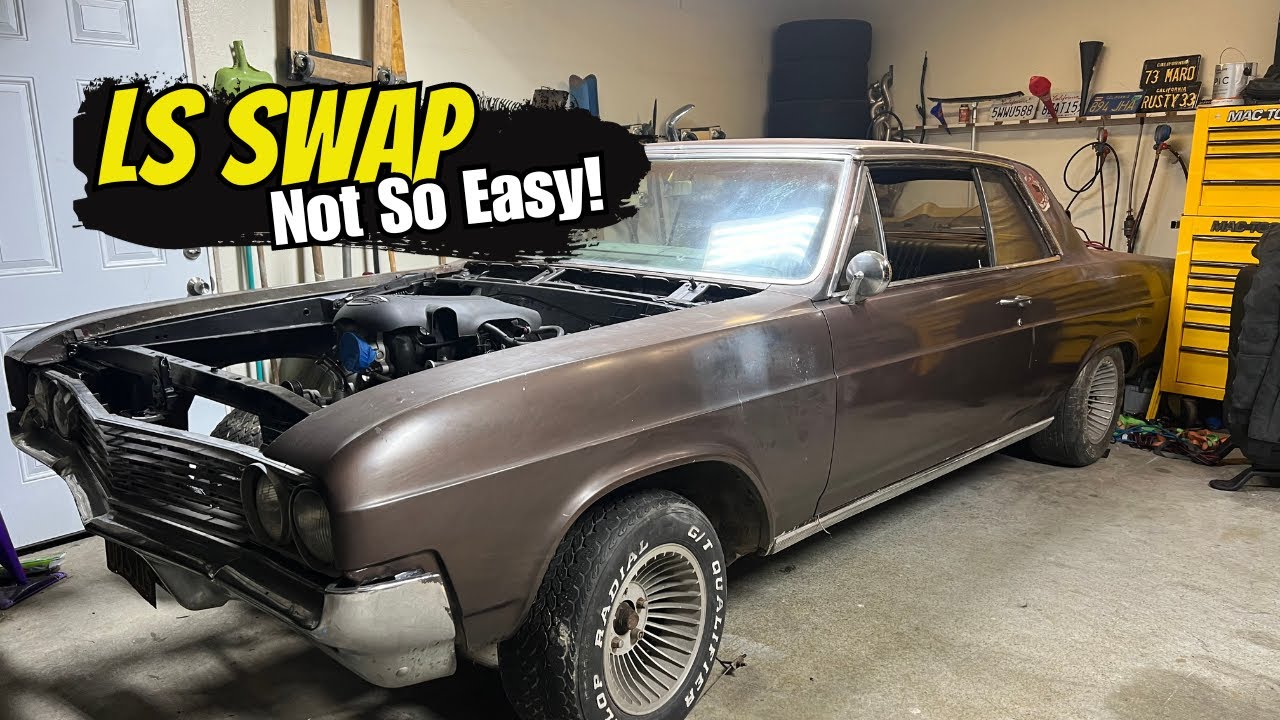
Caption: Swapping an LS engine into a classic vehicle is one of the most popular and rewarding automotive projects of our time. With proper planning, it’s achievable in a home garage.
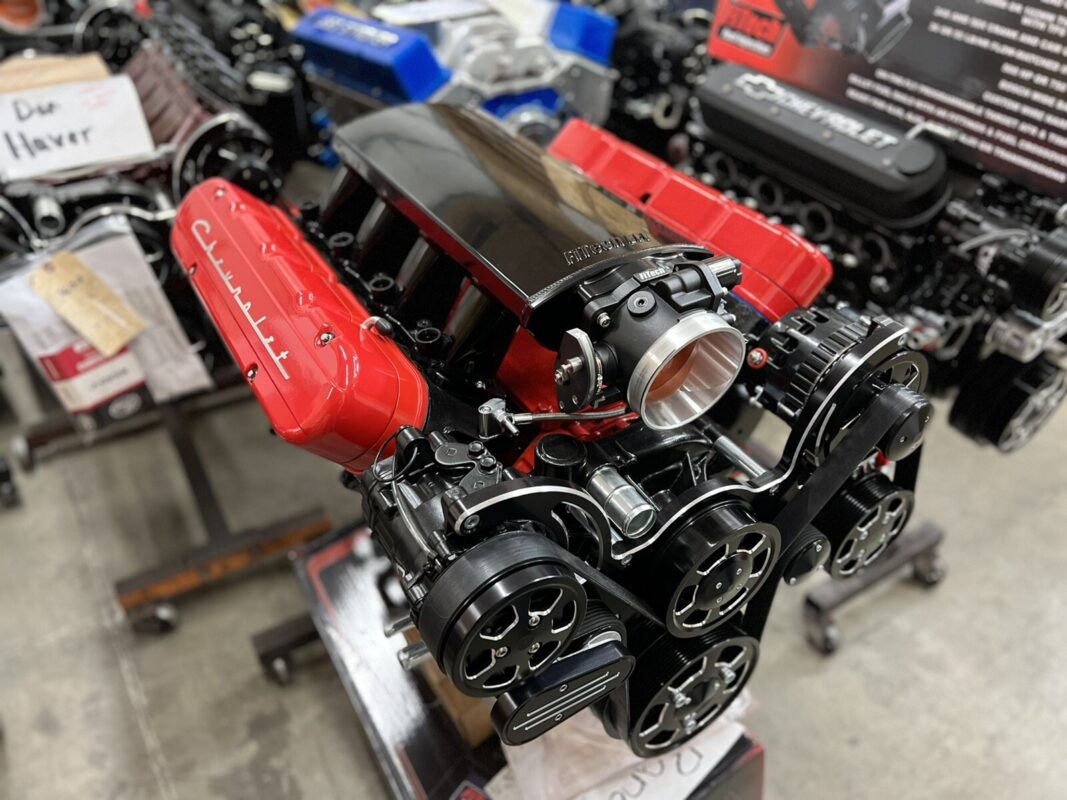
The LS engine has earned its reputation as the ultimate swap candidate. Lightweight, compact, powerful, and endlessly adaptable, these GM powerplants have found their way into everything from classic muscle cars and off-road trucks to European sports cars and Japanese imports. If you’re considering an LS engine swap for your next project, you’re in good company.
This comprehensive guide covers everything you need to know to plan and execute a successful LS engine swap in 2026. From selecting the right engine and transmission to tackling wiring, cooling, and fuel systems, we’ll walk you through each step of the process.
Why Swap in an LS Engine?
![Side-by-side comparison of an original small block Chevy and a modern LS engine on engine stands, highlighting size and design differences]
Caption: The LS engine (right) offers modern performance and reliability in a package that’s only slightly larger than a traditional small block while weighing significantly less.
Before diving into the technical details, it’s worth understanding why the LS platform has become the undisputed king of engine swaps:
-
Power Potential: Even a stock 5.3L truck engine makes 300+ horsepower, while factory LS3 and LSA engines push 430-580 HP without internal modifications.
-
Lightweight Design: The all-aluminum block versions weigh approximately 100 pounds less than traditional iron small blocks, improving handling and performance.
-
Compact Dimensions: The LS is surprisingly small for its displacement, fitting into engine bays originally designed for four-cylinders.
-
Aftermarket Support: No other engine family enjoys the parts availability and community knowledge that surrounds the LS platform.
-
Reliability: Modern EFI, coil-near-plug ignition, and robust bottom ends mean these engines routinely last 200,000+ miles.
-
Cost-Effectiveness: Millions of LS engines exist in salvage yards, making them an affordable starting point for any budget.
Step 1: Choose Your LS Engine
![Row of different LS engines labeled with their codes, showing visual differences between iron and aluminum blocks]
Caption: From left to right: 5.3L iron truck engine (LM7), 6.0L iron (LQ4), 5.7L aluminum (LS1), and 6.2L supercharged aluminum (LSA). Each has unique characteristics for different swap goals.
Not all LS engines are created equal. Your choice will impact power potential, installation complexity, and budget.
| Engine Code | Displacement | Power Range | Block Material | Best For |
|---|---|---|---|---|
| LM7/L59/LR4 | 4.8L-5.3L | 270-320 HP | Iron | Budget builds, trucks, first-time swappers |
| LQ4/LQ9 | 6.0L | 300-360 HP | Iron | High-torque applications, heavy vehicles |
| LS1/LS6 | 5.7L | 345-405 HP | Aluminum | Lightweight performance, classic cars |
| LS2/LS3/L92 | 6.0L-6.2L | 400-480 HP | Aluminum | Serious performance builds |
| LSA/LS9 | 6.2L Supercharged | 550-650+ HP | Aluminum | Ultimate power, deep pockets |
Pro Tip: For most first-time swappers, a 5.3L iron block (LM7) from a 1999-2007 GM truck offers the best value. They’re plentiful, cheap, and provide a perfect platform to learn on. Read our detailed guide on [Choosing the Right LS Engine for Your Swap].
Step 2: Select a Transmission
![Various transmissions compatible with LS engines displayed side-by-side: T56 manual, 4L60E automatic, and TKO 5-speed]
*Caption: Transmission choice dramatically affects driving experience. The T56 6-speed (left) offers overdrive and strength, while the 4L60E (center) provides cruise-friendly automatic operation.*
Your transmission choice is nearly as important as the engine itself. The LS family uses a specific bellhousing pattern that’s different from traditional small blocks.
Popular Manual Options:
-
TREMEC T56 Magnum: The gold standard for high-horsepower applications. Handles 700+ HP and offers six speeds.
-
TKO-500/600: Excellent five-speed options that balance strength and affordability.
-
AR5: A budget-friendly five-speed from 2000s GM trucks/cars, suitable for mild builds.
Popular Automatic Options:
-
4L60E/4L65E: Common, affordable, and compact. Best for engines under 400 HP.
-
4L80E/4L85E: Massive, heavy, and nearly indestructible. Ideal for high-torque applications.
-
6L80E/6L90E: Modern six-speed automatics with overdrive. Require more complex controller.
![Cutaway diagram of a T56 Magnum transmission showing internal gears and construction]
Caption: The T56 Magnum’s robust internal design makes it capable of handling over 700 horsepower in demanding applications.
For most street-driven swaps, the 4L60E offers the best balance of size, availability, and cost. For manual enthusiasts, the TKO-600 is a proven performer.
Step 3: Engine Mounts and Positioning
![Custom engine mounts designed to position an LS engine in a classic engine bay, with adjustable sliding plates for fine-tuning position]
Caption: Quality engine mounts with adjustability are essential for proper positioning, oil pan clearance, and driveline angles. These Dirty Dingo mounts allow sliding adjustment for perfect fitment.
Proper engine placement affects everything from hood clearance to driveline angles. The good news is that the aftermarket has developed bolt-in solutions for virtually every popular chassis.
For Common Vehicles:
-
Classic Mustangs: Companies like Holley and March Performance offer complete systems.
-
Early Camaros/Chevelles: Dirty Dingo, ICT Billet, and others provide adjustable mounts.
-
Jeeps: Novak Conversions specializes in LS swaps for off-road vehicles.
-
BMWs, Datsuns, and Imports: Sikky, CX Racing, and others support these popular swaps.
![Diagram showing critical engine placement measurements including driveline angle, oil pan clearance, and firewall distance]
Caption: Correct engine positioning affects everything from oil pan clearance to transmission angle. Take time to measure twice and install once.
Key Considerations:
-
Oil Pan Clearance: Many aftermarket oil pans are available to fit specific chassis. The Holley oil pan is a popular choice for tight engine bays.
-
Steering Shaft Clearance: Check for interference with steering components early.
-
Transmission Tunnel: Some transmissions may require tunnel modifications.
Step 4: Wiring and Electronics
![LS swap wiring harness laid out on a workbench, showing labeled connections for ECU, injectors, coils, and sensors]
Caption: Modern swap-specific wiring harnesses come pre-labeled and organized, transforming what was once the most intimidating part of an LS swap into a manageable task.
The wiring is often the most intimidating part of an LS engine swap, but modern solutions have made it far more approachable.
Your Options:
-
Factory Harness Modification: You can modify the original engine harness, removing unnecessary wires for your application. This is the most cost-effective but time-consuming option.
-
Standalone Swap Harness: Companies like PSI, BP Automotive, and Speartech offer complete, pre-modified harnesses designed for swaps. These are plug-and-play and worth the investment for most builders.
-
Aftermarket ECUs: Holley Terminator X, MegaSquirt, and other aftermarket systems offer total control and flexibility but require more setup and tuning expertise.
![Holley Terminator X ECU and touchscreen display mounted in a test vehicle]
Caption: Aftermarket systems like Holley Terminator X offer advanced tuning capabilities and touchscreen control for those wanting maximum adjustability.
Essential Electronics Components:
-
ECU: Pre-programmed for your engine (often included with swap harnesses)
-
Fuse Box: Integrated into quality swap harnesses
-
DBW Pedal: If using electronic throttle body (most LS engines after 2000)
-
O2 Sensors: Required for proper fuel control
-
VATS Bypass: Eliminates factory anti-theft system
Pro Tip: Order a harness specifically for your engine and transmission combination. This single purchase eliminates countless hours of frustration.
Step 5: Cooling System
![Aluminum radiator with dual electric fans mounted in a classic car engine bay, showing clean installation and proper shrouding]
Caption: A high-quality aluminum radiator with properly shrouded electric fans ensures your LS engine maintains optimal operating temperatures even in summer traffic.
LS engines generate significant heat, and your cooling system must be up to the task.
Key Components:
-
Radiator: Choose a high-flow aluminum radiator sized for your engine’s power output. Champion, Griffin, and Mishimoto offer excellent options.
-
Electric Fans: Modern LS swaps demand electric fans with proper shrouding. A dual-fan setup is recommended for most applications.
-
Coolant Flow: LS engines require a specific coolant flow direction. Use a water pump designed for your engine and ensure your radiator’s inlet/outlet are properly matched.
-
Steam Tube: Don’t forget to plumb the steam tube from the back of the heads into the upper radiator hose or coolant reservoir.
![Diagram showing LS engine coolant flow path, highlighting steam tube connection and proper routing]
Caption: Proper coolant routing is essential for LS engine longevity. Note the steam tube connection from the back of the heads to the upper radiator hose.
Step 6: Fuel System
![In-tank fuel pump assembly with Walbro 255 pump, fuel level sender, and modified hanger for LS swap application]
*Caption: A high-pressure in-tank fuel pump is essential for LS swaps. This modified assembly uses a Walbro 255 pump capable of supporting up to 500 horsepower.*
LS engines require high-pressure fuel delivery (58 PSI for return-style systems, 58-60 PSI for returnless). Your vehicle’s original fuel system won’t work.
Fuel System Requirements:
-
In-Tank Pump: A Walbro 255 LPH pump is the minimum for most builds. For higher horsepower, consider 340+ LPH pumps.
-
Fuel Lines: -6 AN lines are sufficient for most applications up to 600 HP.
-
Regulator: Return-style systems require a fuel pressure regulator set to 58 PSI.
-
Filter: Use a 10-micron EFI-rated filter before the engine.
![AN fuel line routing under a vehicle showing proper support and protection]
Caption: Properly routed and supported AN fuel lines ensure reliable fuel delivery and safety. Use braided stainless lines or hard lines with quality fittings.
Pro Tip: If your vehicle originally had a mechanical fuel pump, you’ll need to block that opening and may need an in-tank pump conversion.
Step 7: Exhaust
![Custom stainless steel headers designed for LS engine in a classic Camaro, showing tube routing and collector design]
Caption: Swap-specific headers like these Hooker units are designed to fit specific chassis, simplifying exhaust fabrication and maximizing performance.
LS engines have different exhaust port spacing than traditional small blocks, requiring custom headers or manifolds.
Options:
-
Factory Manifolds: Truck manifolds are compact and work in many swaps but restrict flow.
-
Swap Headers: Companies like Hooker, Stainless Works, and Speed Engineering offer headers specifically for LS swaps in popular chassis.
-
Custom Fabrication: For unique vehicles, custom headers may be necessary.
![Completed exhaust system on LS-swapped vehicle showing mandrel bends and quality welds]
Caption: A properly designed exhaust system with mandrel bends and quality mufflers maximizes power while maintaining a pleasant exhaust note.
LS Swap Checklist: What You’ll Need
| Category | Essential Components |
|---|---|
| Engine | LS engine (complete with accessories, intake, throttle body) |
| Transmission | Compatible transmission with correct bellhousing |
| Mounts | Engine mounts, transmission mount, crossmember (as needed) |
| Wiring | Swap-specific harness, ECU, fuse box, DBW pedal (if applicable) |
| Cooling | Radiator, electric fans, hoses, coolant reservoir |
| Fuel | High-pressure pump, lines, regulator, filter |
| Exhaust | Headers or manifolds, exhaust system |
| Driveshaft | Modified or custom driveshaft for new transmission length |
| Accessories | Alternator wiring, power steering lines, A/C components |
| Gauges | Adapters or new gauges for modern sensor signals |
Frequently Asked Questions (FAQs)
Q: How much does a typical LS engine swap cost?
A: A budget swap using a junkyard 5.3L and basic components can cost $3,000-$5,000. A comprehensive swap with a rebuilt engine, new transmission, quality harness, and all supporting systems typically runs $8,000-$15,000. High-end builds with crate engines and premium components can exceed $25,000.
Q: How long does an LS swap take?
A: For an experienced fabricator working on a well-supported chassis, a swap can be completed in 40-80 hours. First-time swappers should expect 100-200 hours spread over several months.
Q: Will an LS engine fit in my vehicle?
A: LS engines have been swapped into virtually everything: Mustangs, Camaros, BMWs, Porsches, Jeeps, and even Miatas. Research online forums for your specific chassis to see what’s involved.
Q: Do I need to upgrade my brakes and suspension?
A: Absolutely. Adding 100+ horsepower to a classic vehicle requires corresponding upgrades to brakes, suspension, and tires. At minimum, upgrade to disc brakes and consider improved springs and shocks.
Q: Can I use my original gauges with an LS swap?
A: Factory gauges can be made to work with adapters and signal converters. Many builders choose to upgrade to modern aftermarket gauges for simplicity and accuracy.
Conclusion: Your LS Swap Adventure Awaits
![Completed LS swap in a classic Chevrolet Camaro, engine bay clean and professional with all components properly installed]
Caption: The satisfaction of a completed LS swap is unmatched—modern performance wrapped in classic style. With careful planning and quality components, you can achieve results like this in your own garage.
An LS engine swap is one of the most rewarding automotive projects you can undertake. It transforms the driving experience of any vehicle, combining modern reliability and power with your personal style and vision. With careful planning, quality components, and patience, you can achieve professional results in your own garage.
The LS platform’s popularity means you’ll never be alone in your journey. Countless online communities, forums, and suppliers exist to support you every step of the way.
![Happy owner standing next to their completed LS-swapped vehicle, giving thumbs up]
Caption: Thousands of enthusiasts have successfully completed LS swaps. With this guide and the right components, you can join their ranks.
Ready to start your LS swap? Browse our selection of [LS Swap Components and Kits] or [Contact Our Swap Specialists] for personalized advice on your specific vehicle and goals.
[Back to Applications Section] | [Shop All LS Engines]