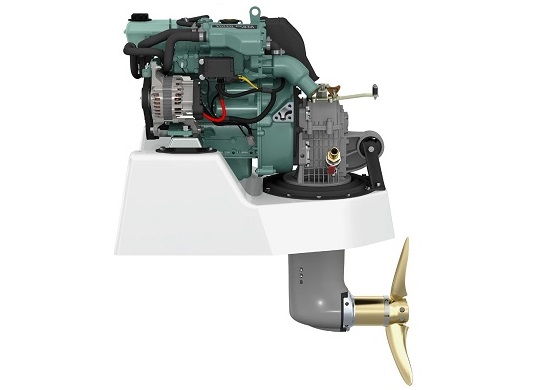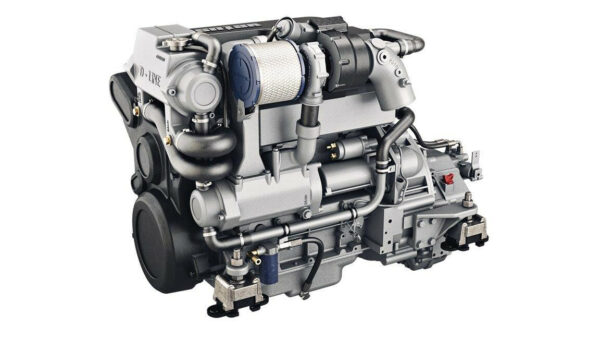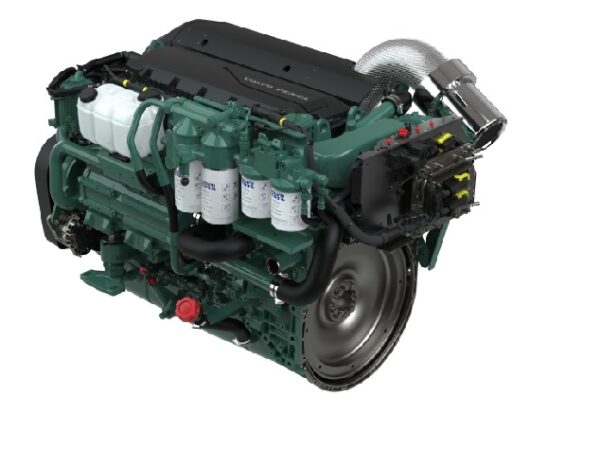

Volvo Penta D8-600 Inboard Diesel Engine
Advanced, High-Torque Propulsion for Demanding Yacht and Commercial Applications
Introduction
At Hammer Engines, we’ve specified propulsion systems for everything from coastal fishing vessels to luxury motoryachts. In that time, few engines have impressed us as much as the Volvo Penta D8-600. This engine represents a pinnacle of modern marine diesel engineering (inboard motor), perfectly balancing high power density with operational efficiency. It’s not merely an industrial block adapted for the sea; it’s a fully integrated propulsion system designed from the keel up to deliver smooth, responsive, and remarkably clean power.
This 600 horsepower inboard is engineered for the most discerning boat builders and owners. It is the ideal heart for high-performance motoryachts (50-70 feet), fast commuter vessels, and heavy-duty commercial craft where reliability, speed, and fuel economy are non-negotiable. The D8 platform is renowned for its robust, compact design, but its true genius lies in its seamless integration with Volvo Penta’s IPS pod drives or traditional shaft lines, offering unparalleled maneuverability and performance gains. For a flawless integration that unlocks the system’s full potential, our team provides expert Marine Engine Installation & Integration Services.
We value the D8-600’s advanced common-rail fuel injection and twin-entry turbocharger system, which delivers immense low-end torque for quick planing and exceptional mid-range efficiency for long-range cruising. This is not just about raw power; it’s about usable, controllable power that enhances the seakeeping characteristics of the vessel. As an authorized service center, we ensure your investment is protected with our comprehensive Volvo Penta Maintenance & Service Plans, providing access to genuine parts and proprietary diagnostic software.
Technical Specifications Table
| Specification | Detail |
|---|---|
| Manufacturer | Volvo Penta |
| Model | D8-600 |
| Engine Type | 6-Cylinder Inline, Common Rail Diesel |
| Displacement | 7.7 L |
| Max Power (ISO 8665) | 600 hp (441 kW) @ 2300 RPM |
| Max Torque | 1840 lb-ft (2494 Nm) @ 1400-1900 RPM |
| Aspiration | Twin-Turbocharged & Aftercooled |
| Fuel System | High-Pressure Common Rail |
| Cooling System | Freshwater Heat Exchanger |
| Emissions Compliance | IMO Tier III, EPA Tier 3, RCD Stage V |
| Gearbox Options | Compatible with IPS Pod Drives or Traditional Shaft Line |
| Control System | Volvo Penta Electronic Vessel Control (EVC) |
| Warranty | 3-Year Commercial / 5-Year Recreational |
Application & Use-Case Section
The D8-600’s blend of high power and compact dimensions makes it exceptionally versatile for a range of sophisticated marine applications.
-
High-Performance Motoryacht Propulsion: The definitive application for twin or triple installations. When paired with Volvo Penta IPS, it provides joystick maneuvering, 30% greater range, and significantly reduced vibration and noise compared to traditional shaftlines, defining the modern yachting experience.
-
Fast Commercial Crew & Pilot Boat Power: Built to handle the relentless stop-start, high-speed demands of crew transfer and pilot operations. The massive low-RPM torque ensures rapid acceleration and the robust construction guarantees durability in 24/7 service.
-
Expensive Sportfish & Long-Range Cruisers: Ideal for owners who demand both thrilling speed to the fishing grounds and quiet, fuel-efficient trolling. The compact size allows for more interior volume, and the advanced electronics enable seamless integration with onboard systems. For a deeper dive, read our guide: IPS vs. Traditional Shaftlines: Choosing Your Propulsion System.
Competitor Comparison Table
| Feature | Volvo Penta D8-600 | Competitor A 600hp | Competitor B 650hp |
|---|---|---|---|
| Propulsion Integration | Fully Integrated IPS or Shaft | Shaft Line Only | Shaft Line or Proprietary Pod |
| Torque Curve | Peak Torque from 1400 RPM | Peak Torque at 1800 RPM | Peak Torque at 1600 RPM |
| Electronics & Control | Volvo Penta EVC (Fully Integrated) | Proprietary System | Third-Party Compatible |
| Emissions Technology | Advanced SCR for Tier III Compliance | EGR Focused | EGR & SCR |
| Service Network | Global Marine-Dealer Network | Strong Global Network | Specialized Network |
| Total System Cost | Higher (Integrated System Premium) | Moderate | High |
Hammer Engines Verdict: The Volvo Penta D8-600 stands apart as a complete, integrated propulsion solution rather than just an engine. While Competitor A offers a solid traditional engine, it cannot match the performance and maneuverability benefits of the IPS system. Competitor B may offer more peak horsepower, but the D8-600’s vastly superior low-end torque and broader torque curve make it feel more powerful in real-world conditions, especially when getting a heavy vessel on plane. For new builds or repowers where overall vessel performance is the goal, the Volvo Penta system offers a compelling, albeit premium, advantage.
Pros and Cons Table
| Pros | Cons |
|---|---|
| Unmatched Maneuverability with IPS: Joystick control, dynamic positioning, and superior handling transform the boating experience, especially in tight marinas. | Premium System Cost: The advanced technology and integrated nature of the Volvo Penta system command a higher initial investment than conventional shaftline competitors. |
| Exceptional Fuel Efficiency: The combination of common-rail injection, advanced turbocharging, and the efficiency of IPS drives results in significantly better fuel economy and range. | Proprietary Systems: Requires Volvo Penta’s EVC electronics and proprietary diagnostic tools for service, locking owners into the manufacturer’s dealer network for complex issues. |
| High Power-to-Weight Ratio: A compact, lightweight package for its power class, freeing up valuable space in the engine room and improving vessel performance. | Complexity: The sophisticated electronics, emissions systems (SCR), and pod drive mechanics are more complex than a traditional shaft-and-rudder setup, requiring specialized technician training. |
| Low Noise & Vibration: Engineered with a dual-mass flywheel and balanced components, and further isolated in IPS applications, leading to an exceptionally quiet and smooth ride. | Potential Pod Drive Vulnerability: While robust, the IPS pods extend below the hull and can be more susceptible to damage in grounding compared to protected traditional propellers and shafts. |
Frequently Asked Questions (FAQ)
Q1: What is the difference between the D8-600 and the D13-800?
The primary differences are displacement, power, and physical size. The D8 is a 7.7L, 600hp engine that is more compact and lighter. The D13 is a 12.8L, 800hp+ engine for larger yachts and commercial vessels requiring more power. The D8 is ideal for applications where space and weight are critical, while the D13 is for maximum performance and heavy displacement.
Q2: Can I repower my older boat with a D8-600 and IPS drives?
While technically possible, repowering a shaft-driven boat with IPS is a major structural undertaking. It involves cutting the hull to install the pods and reinforcing the bottom. It is a complex, expensive project typically reserved for new builds. A repower with a D8-600 on a traditional shaft is a more straightforward process.
Q3: What is the required maintenance schedule?
Volvo Penta mandates specific service intervals, typically at 500-hour or annual intervals, whichever comes first. This includes oil and filter changes, fuel filter replacement, and system checks using their diagnostic computer. Adherence to this schedule is critical for maintaining the engine warranty and long-term reliability.
Q4: How does the SCR system work for emissions compliance?
The D8-600 uses Selective Catalytic Reduction (SCR). A diesel exhaust fluid (DEF) is injected into the exhaust stream, which breaks down harmful NOx emissions into harmless nitrogen and water. This allows the engine to be tuned for maximum efficiency and power while still meeting the strictest global emissions standards.
Q5: What is the typical lifespan of this engine?
With proper installation, maintenance, and operational care, a Volvo Penta D8-600 can reliably achieve 10,000+ hours in recreational service. Commercial operators often see 15,000-20,000 hours before major overhaul when maintained meticulously.
Authority-Building Content Hubs & Next Steps
Deepen Your Knowledge
Investing in a propulsion system of this caliber requires expert insight. Our resources are built from direct engineering experience.
-
Understanding Volvo Penta IPS: The Complete Guide to Pod Drive Propulsion
-
The Economics of Repowering: When Does a New Engine Make Financial Sense?
-
Troubleshooting Common Volvo Penta EVC Fault Codes
Take the Next Step
Ready to specify the pinnacle of marine propulsion for your new build or repower project? Our certified Volvo Penta engineers are ready to assist.
Contact our marine propulsion specialists for a detailed technical consultation and quote.